
Pre-fitted

400mm Inlet Strainer
Large inlet strainer to help keep leaves and larger debris out while allowing strong rainwater flow into the tank.
Tankworld Tasmania
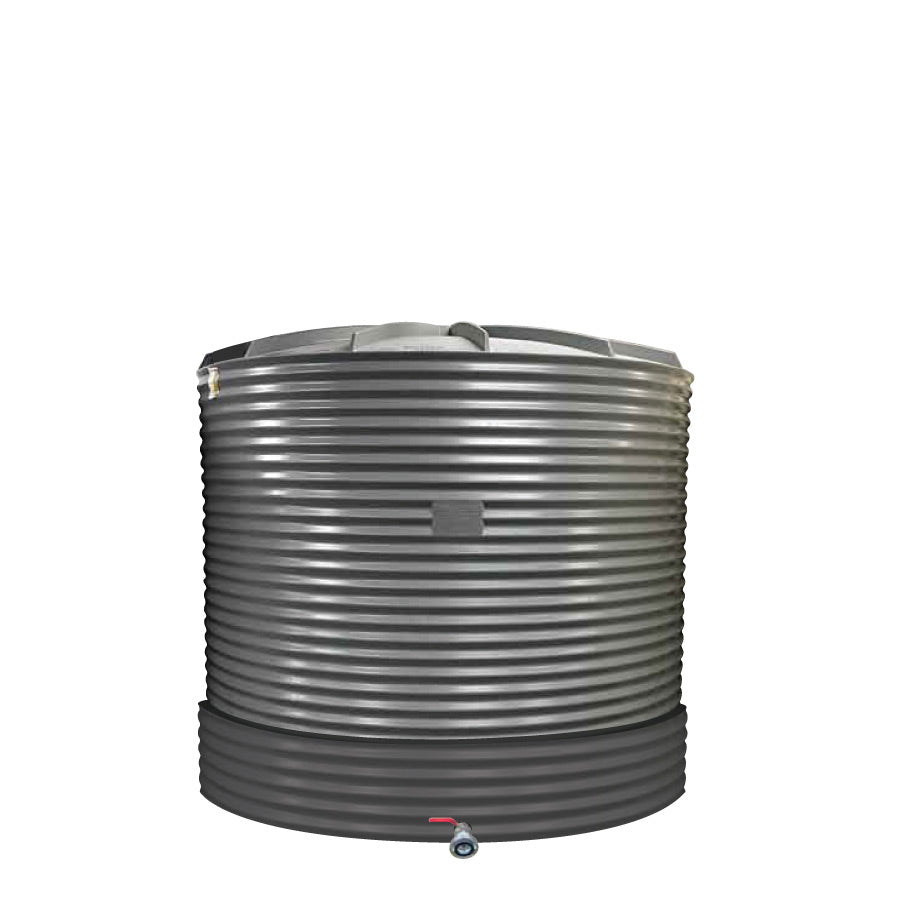
10,000 L polyethylene fire water storage tank designed for use in limited bushfire hazard management applications where an approved poly tank is permitted.
This polyethylene fire tank is not suitable for every fire application, Bushfire Attack Level or bushfire hazard management plan.
Suitability depends on the requirements contained within the Bushfire Assessment Report and planning documents for the property, including any applicable tank location, shielding, access, clearance and connection requirements.
Before ordering, consult your building surveyor, bushfire consultant or other relevant project professional to confirm that a polyethylene fire tank is permitted for your particular application.
Fire Tank Inclusions
The 10,000L Tankworld Poly Fire Tank is supplied with the essential inlet, outlet and fire connection components required for a practical dedicated fire-water setup.
Large inlet strainer to help keep leaves and larger debris out while allowing strong rainwater flow into the tank.

Provides the primary connection point near the base of the tank for the dedicated fire-water outlet assembly.

Provides reliable isolation and control of water through the dedicated fire-water outlet.

Provides a dedicated connection point for accessing the stored firefighting water.

Protects the Storz connection from dirt, debris and weather exposure when not in use.

Clearly identifies the location of the dedicated fire-water supply.

Provides additional protection around the lower section of the poly fire tank.
Poly Fire Tank Colour Range
The 10,000L Poly Fire Tank is available in a selected range of four colours to suit Tasmanian homes, sheds and rural properties.
Choose from the four colours available for this fire tank.
Colours shown are a guide only and may vary between screens, physical samples and the finished product. Where shown, the secondary name indicates the corresponding or closely matched COLORBOND® steel colour.
COLORBOND® is a registered trademark of BlueScope Steel Limited. Colour names marked ™ are trademarks of BlueScope Steel Limited.
Poly Fire Tank Information
A Poly Fire Tank can be chosen for two very different reasons: to provide the required firefighting water supply for an approved building or development, or simply because you want additional water available as part of your own bushfire preparedness. The requirements are different depending on how the tank will be used.
If your approved Bushfire Hazard Management Plan, building documents or other development requirements specify a static firefighting water supply, the complete installation must satisfy the requirements applying to your property.
A polyethylene fire tank may be suitable for selected applications where its location, shielding and installation meet the required criteria. Suitability should be confirmed against your approved documentation by your building surveyor, bushfire practitioner or other relevant professional before ordering.
Tank location, shielding, firefighting reserve, fittings, pipework, access and other requirements may also apply.
You don’t need a building or council requirement to choose to keep additional water available on your property.
A Poly Fire Tank can also be installed voluntarily as part of your own bushfire preparedness, providing a 10,000 litre stored water supply that may be valuable should water be needed during an emergency.
In this application the tank is not being supplied as the mandatory firefighting water storage for a development approval. It retains the versatility of a polyethylene rainwater tank and, where the overall rainwater collection and plumbing system is suitable, the stored water can also be used for normal household purposes, including drinking water.
This application is about voluntarily maintaining additional stored water as part of your own property preparedness.
A stored water supply does not guarantee protection during a bushfire.
Bushfire conditions vary significantly and may damage water tanks, fittings, pipework and other infrastructure. Tankworld does not represent or guarantee that this tank, its fittings, pipework or stored water will remain available during or following exposure to a bushfire.
Regulated Fire Water Applications
Where a firefighting water supply is required as part of a building or development approval, a Poly Fire Tank may be suitable for selected applications only. The proposed tank location, shielding and complete installation must satisfy the requirements applying to your development.
Confirm suitability before ordering.
Your approved Bushfire Hazard Management Plan, building documents or other development documentation should be used to determine whether a polyethylene tank is suitable for your particular application. Confirmation should be obtained from your building surveyor, bushfire practitioner or other relevant professional.
Where 10,000 litres is required for firefighting, that minimum volume must remain available for the required firefighting purpose.
The position of the tank in relation to the building, expected bushfire attack and firefighting access can affect whether a polyethylene tank is suitable.
A polyethylene tank may only be appropriate where the required shielding conditions are achieved in accordance with the requirements applying to the development.
The lowest 400mm of the tank exterior requires suitable non-combustible protection where this pathway is being relied upon.
Firefighting fittings, outlet arrangements and associated pipework must also meet the requirements applying to the complete installation.
Access to the water supply and the firefighting connection may form part of the required installation and should be checked against the approved documentation.
Included Tank Protection
This Poly Fire Tank is supplied with a 400mm high COLORBOND® metal shield around the lower section of the tank.
The shield is included to provide the lower non-combustible protection required where a polyethylene tank is being used through the applicable shielding pathway.
The shield alone does not make the tank suitable for every site. The tank must also be positioned and shielded in a way that meets the requirements applying to the individual development.
This is a summary only.
The points above are intended to help explain why a polyethylene fire tank may be suitable for some regulated applications. They are not a complete statement of the requirements. Always refer to your approved Bushfire Hazard Management Plan, building documentation and the applicable statutory and Australian Standard requirements for your development.
Understanding Shielding
Shielding is about the position of the tank in relation to the expected direction of bushfire attack and the building itself. It is not simply a matter of fitting metal protection around the tank.
In a suitable installation, the building or another qualifying part of the structure may shield the tank from the expected direction of bushfire attack.
This means the tank is positioned on the side of the building that is considered protected from direct bushfire attack under the applicable shielding provisions.
The correct position is site-specific. Your approved development documentation should identify the required tank location and whether the proposed installation satisfies the shielding requirements.
Referenced Standard
The applicable Tasmanian requirements reference the shielding provisions contained within AS 3959. These provisions consider whether a part of a building or installation is exposed to the source of bushfire attack, including whether another part of the building provides effective shielding.
Example — Shielded Side
In principle, this is the type of arrangement where the building may provide shielding to the tank from the expected direction of attack.
Example — Exposed Side
If the tank is positioned directly in the expected path of bushfire attack, the building may not provide the shielding required for the polyethylene tank pathway.
These diagrams are explanatory only.
They are intended to help explain the general concept of shielding and are not a substitute for an assessment under AS 3959, your approved Bushfire Hazard Management Plan or other development documentation. The direction of bushfire attack and acceptable tank location must be determined for the individual site.
Important Information
The information on this page is intended to help explain how a Poly Fire Tank may be used in selected bushfire-related applications. Individual developments can have different requirements.
Refer to the current Tasmanian requirements applying to buildings and static firefighting water supplies in bushfire-prone areas.
Tasmania Fire Service →Construction of buildings in bushfire-prone areas, including the shielding provisions referenced for applicable installations.
Standards Australia →Your Bushfire Hazard Management Plan, building approval and associated documents should always be treated as the primary reference for your individual installation.
Tankworld does not assess or certify the bushfire compliance of individual developments.
The information provided by Tankworld Tasmania is general information intended to assist customers in understanding the potential application of a Poly Fire Tank. It is not building, planning, bushfire, engineering or legal advice.
Where a tank is being installed to satisfy a building, planning or bushfire requirement, the suitability of a polyethylene tank and its proposed location, shielding and installation must be confirmed against the requirements applying to the individual development.
Tankworld supplies the tank and the specified tank fittings and shielding components included with the product. Tankworld does not certify that the completed installation complies with a Bushfire Hazard Management Plan, building approval or other statutory requirement.
A stored firefighting water supply may assist during an emergency, but Tankworld does not represent or guarantee that the tank, fittings, pipework or stored water will remain available during or following exposure to a bushfire.
Requirements, standards and referenced documents may change. Customers should confirm the requirements applicable to their development with their building surveyor, bushfire practitioner or other appropriately qualified professional before purchase and installation.
Installing this tank to satisfy a development requirement?
Confirm the proposed Poly Fire Tank, tank location and shielding arrangement against your approved documentation before ordering.
Choose standard delivery or ask whether customer-assisted positioning onto your prepared tank pad is suitable for your site.
Once positioned on a suitable prepared base, the tank inlet, overflow and outlet can be connected to suit your property. Plumbing and final installation are arranged by the customer.
Helpful Information
Find answers, practical advice and helpful information to assist with choosing, preparing for and getting the most from your water tank.
Quick answers about ordering, delivery, installation and product care.
Visit Help CentrePractical articles covering tank placement, water storage and planning.
Browse ArticlesCompare common capacities and choose suitable water storage.
Read the GuideCheck access, unloading requirements and site preparation.
Read Delivery GuideReady to get started?
Tell us what you need and our team will help confirm the right tank, fittings and delivery option for your property.
Tasmanian-made tanks backed by experienced local advice.
